It is important to understand that Donald Trump and the people around him are behaving the way desperate actors behave, because they do not know how to solve the problem in front of them. There is no magic switch that restores an empire once its economic foundations begin to weaken. There is no simple policy that reverses the long-term structural decline of a dominant power, and there is no shortcut around the economic consequences that follow when an empire reaches its limits. What makes this moment uniquely dangerous is that, for the first time in the history of American global dominance, the United States now faces a real economic competitor. Not a regional rival, not a temporary challenger, but a sustained, rising system growing faster than the United States year after year for three decades. So the reality is not just that American power is declining, but that someone else is rising rapidly at the same time.
Against that backdrop, Trump’s behavior begins to look less like strategy and more like panic. Economic anxiety, geopolitical insecurity, and internal decay collide, and instead of addressing them honestly, the response becomes distraction, spectacle, and repression. That is why it matters to keep paying attention to what Ghislaine Maxwell is doing and what the Trump administration is trying not to release. The administration is actively blocking the disclosure of records tied to her child sex trafficking operation with Jeffrey Epstein, an operation in which she was not a peripheral figure but a central co-conspirator. We already know from released material that there are at least ten additional potential co-conspirators whose names have not been fully disclosed. What remains largely hidden are grand jury materials, FBI witness interviews, survivor testimony, and internal investigative records. The absence of those records is not accidental.
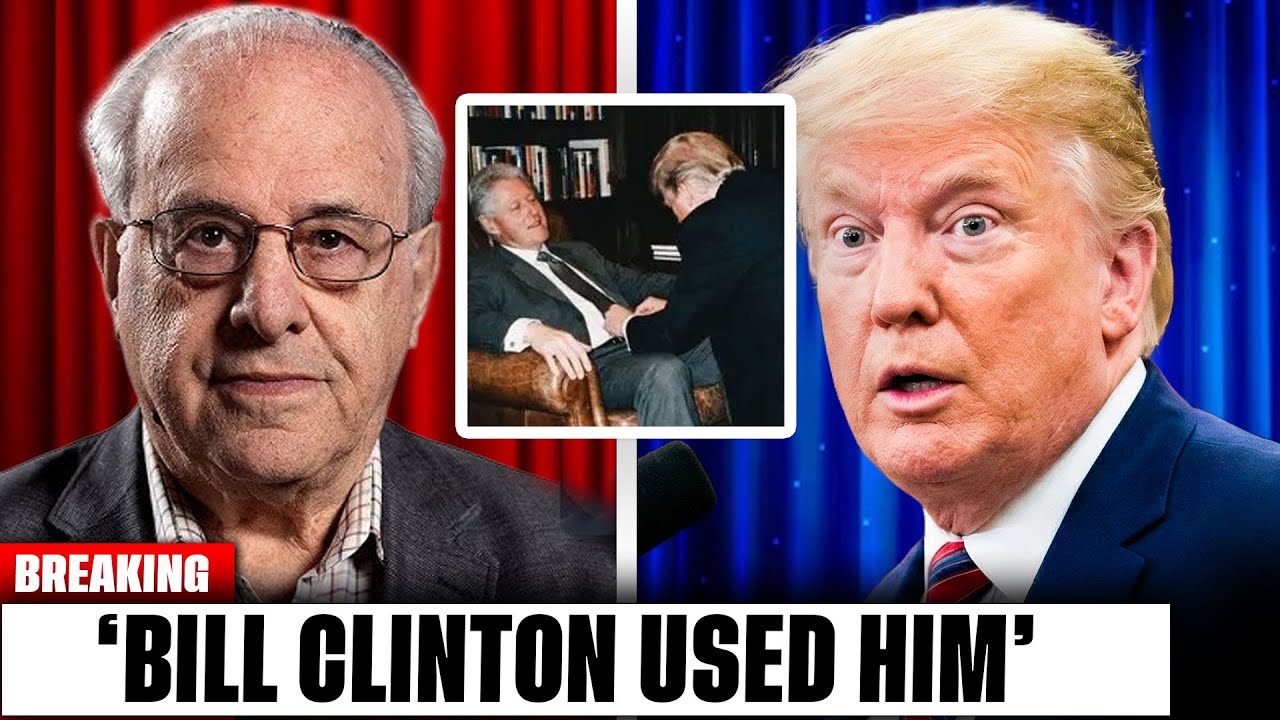
At the same time, Trump has reacted aggressively whenever figures like economist Richard Wolff publicly connect these dots. While much of the mainstream media continues to treat Trump with caution or superficial criticism, Wolff has spent 2025 dismantling Trump’s economic mythology in plain language, live on air, with an intensity that helps explain why Trump avoids responding directly. Wolff’s critique is not about personality. It is about structure. In interviews following Trump’s January 2025 inauguration, Wolff made an observation that cut deeper than any insult: what mattered most was not what was present at the ceremony, but what was absent. Trump did not surround himself with intellectuals, public servants, or institutional leaders. He lined the stage with corporate oligarchs—Zuckerberg, Bezos, Musk—symbols of concentrated private power, seated as if they were shareholders watching a hostile takeover finalize.
Wolff described the symbolism bluntly and accurately. It was not subtle. It was not clever. It was an open declaration of allegiance to concentrated wealth. And from there, Wolff went further, explaining that Trump’s economic program is not confused or incoherent, but brutally simple. The central pillar of Trump’s economic legacy is the 2017 tax cut, which Wolff called one of the most damaging blows to economic equality in modern American history. That tax cut slashed revenue from corporations and the wealthy after four decades in which wealth had already been redistributed upward from the working and middle classes. Never, Wolff noted, had corporations and the rich needed a tax cut less, and yet they received one of the largest in history.
The consequence was predictable. With massive revenue removed, the federal government had to borrow to function. And crucially, it borrowed from the same corporations and wealthy individuals who had just received the tax cut. In effect, Trump transferred public revenue into private hands, then forced the public to borrow it back at interest. The American people now pay twice: once through lost public services and again through debt servicing. This is not theory. This is how federal budgets work. When spending exceeds revenue, the difference is borrowed. Under Trump, that borrowing exploded not because of social spending, but because revenue was deliberately gutted at the top.

What makes the scheme even more dangerous is that those tax cuts were originally set to expire at the end of 2025. Trump’s core economic agenda in his second term is to make them permanent, locking in a system where wealth extraction never ends and public debt compounds indefinitely. As Wolff explained, this comes after forty years of upward redistribution. The tax cut was not an economic necessity. It was a political payoff. Trump gave corporations and the rich exactly what they wanted, and in return, he secured their support.
Meanwhile, the costs of this system are hidden in plain sight. The United States maintains the largest military apparatus in human history, spending more on defense than the next eight or nine countries combined. Debt grows faster than economic output. Interest payments are projected to exceed defense spending itself. Creditors begin to worry. And when creditors worry, power weakens. That is the structural reality Trump refuses to confront.
Instead, Trump lashes out. Tariffs. Sanctions. Threats to seize Greenland. Talk of reclaiming the Panama Canal. Fantasies of absorbing Canada. These are not policies designed to solve economic decline. They are performances designed to mask it. As Wolff put it, Trump is not irrelevant because he lacks influence, but because he is a symptom, not a cause. The real story is the decline of American empire, a seventy-five-year period of dominance now giving way to a multipolar world led by rising powers like China and the broader BRICS bloc.
Rather than manage that transition responsibly, Trump treats the problem as a branding failure. He performs toughness while the underlying numbers deteriorate. The ratio of debt to economic output becomes unsustainable. The cost of borrowing rises. And the very tariffs Trump celebrates function as taxes on American consumers, a fact Wolff repeats relentlessly. A tariff is not paid by foreign governments. It is paid by domestic buyers. The irony, as Wolff notes, is that the Republican Party, which built its identity on opposing taxes for a century, now imposes massive hidden taxes on its own population while calling them patriotism.
When Wolff connects this economic strategy to political repression, the picture becomes even darker. He argues that what we are witnessing is not just bad policy, but a war on the working class at home and abroad. As debt service crowds out social spending, pressure increases to cut wages, benefits, and public investment. At the same time, the administration works aggressively to suppress accountability, whether by blocking records related to Epstein and Maxwell or by attacking journalists, lawyers, and institutions that threaten exposure.
This is why the Maxwell case matters. Her habeas corpus petition, filed without her longtime defense attorney’s signature, raises questions not only about her conviction but about what information remains buried. It provides a procedural excuse for the Department of Justice to delay or deny the release of records. And it creates plausible deniability for an administration deeply invested in keeping certain names out of public view.
Taken together, these threads form a single pattern. Economic decline produces political desperation. Political desperation produces repression and distraction. And repression is justified through nationalism, spectacle, and manufactured enemies. Trump’s anger at critics like Richard Wolff is not personal. It is structural. Wolff is naming the reality Trump needs hidden: that there is no policy capable of restoring American dominance without confronting inequality, debt, and imperial overreach, and that Trump’s solutions actively accelerate the collapse he claims to oppose.
What we are watching is not the revival of an empire, but the behavior of one that knows it is losing ground and is lashing out accordingly.
VIDEO: