Donald Trump’s shocking claim exposed.

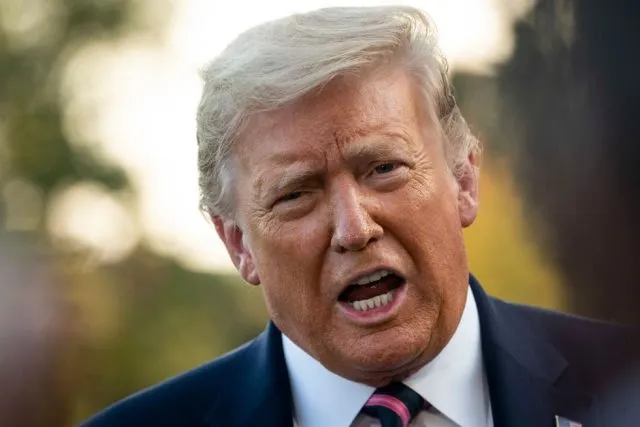
In a dramatic move, President Donald Trump has crowned himself ‘King’ after shutting down a policy.
Trump’s flair for dramatic statements highlighted.

Trump has a long history of making grandiose and attention-grabbing statements, often comparing himself to historical figures and larger-than-life personas.

In 2016, he famously declared, “I alone can fix it,” during his Republican National Convention speech, presenting himself as the singular solution to America’s problems.

While in office, he repeatedly likened himself to Abraham Lincoln, claiming, “I’ve done more for Black Americans than any president, maybe except Lincoln.”

In 2020, during the COVID-19 pandemic, he referred to himself as a “wartime president,” framing the fight against the virus as his personal battle.

After his second impeachment, he compared his treatment to that of Jesus Christ, saying, “People have been treated very unfairly in history—some more unfairly than others,” leading supporters to draw biblical parallels.

His dramatic rhetoric extends beyond politics—he once called himself “the chosen one” while discussing trade policies with China, looking to the sky as he said it.
Trump’s bold declaration highlighted.

Trump made the declaration on Truth Social, boasting, “Manhattan, and all of New York, is saved. Long Live The King!”

New York Governor Kathy Hochul responded swiftly, rejecting Trump’s statement: “We are a nation of laws, not ruled by a king. We’ll see you in court.”

His announcement followed an official decision by Transportation Secretary Sean Duffy, who revoked federal approval for the toll system that charged most drivers $9 to enter Manhattan’s busiest areas.

Trump, who has long opposed the policy, previously called it a “crippling tax” that would make it harder for the city to recover.

His decision to intervene has sparked debate over whether he’s motivated by public interest or his own real estate holdings in the affected area.

New York’s congestion pricing plan was inspired by similar efforts in global cities like London and Singapore, where tolls have been used to reduce gridlock and pollution.

Revenue from the program was intended to help modernize New York’s aging transit system, which serves millions of daily commuters.

However, the toll system faced backlash from suburban drivers and businesses, who argued it placed an unfair financial burden on them.

The policy had been years in the making, going through extensive legal and environmental reviews before finally taking effect.
Reactions to Trump’s move profiled.

Trump’s abrupt move to cancel the program has reignited concerns over federal overreach and states’ rights, with critics accusing him of interfering in local policies.

Some politicians have gone as far as comparing Trump’s actions to the early stages of authoritarian rule, warning of the dangers of unchecked executive power.

Illinois Governor J.B. Pritzker referenced historical precedents, cautioning that dismantling democratic processes can happen shockingly fast.

The president’s self-proclaimed “royal” status has drawn attention to the Founding Fathers’ intent to prevent any form of monarchy in the U.S.

Figures like James Madison and John Adams explicitly warned against the dangers of centralized power and the rise of strongman leaders.

John Adams once noted that democracy without checks could lead to the rise of an autocrat—a sentiment that now seems eerily relevant.
The conflict escalates.

The strength of America’s institutions is being put to the test as this conflict escalates.

Throughout history, democracy has survived only when its defenders remain vigilant and committed to the rule of law.

How this unfolds remains uncertain, but one thing is clear—the battle for control over New York’s streets has only just begun.