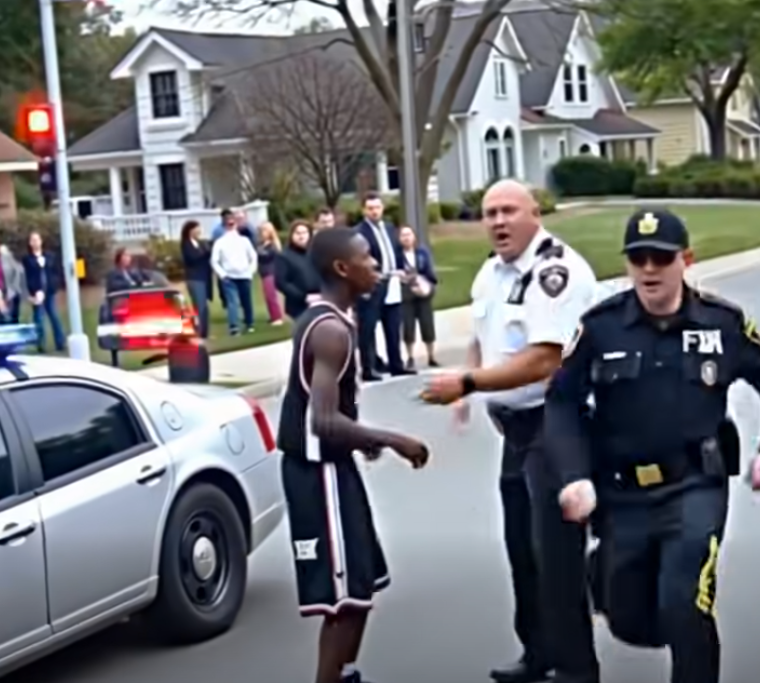
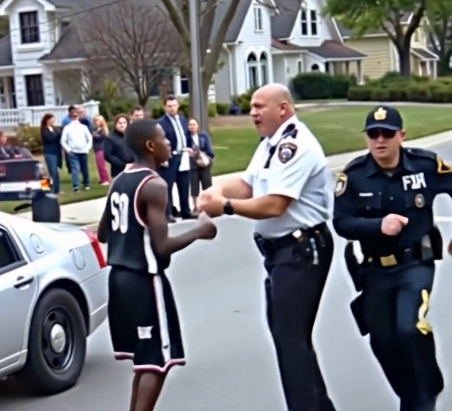
as he realized the gravity of the situation. He stammered, trying to regain his composure, “Sir, I was just following protocol.”
Agent Carter fixed him with a steely gaze. “Protocol doesn’t include assaulting innocent teenagers,” he said coldly. The weight of the badge on Reed’s chest felt heavier than ever. The officers around him exchanged uneasy glances, realizing that the tables had turned dramatically.
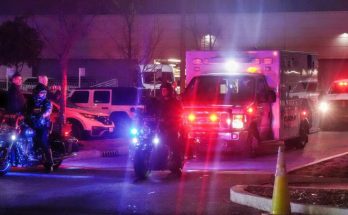
Outside, a small crowd had gathered, drawn by the commotion and the presence of the FBI. Among them, a few had witnessed the earlier arrest and were now murmuring about the injustice they had seen. The tension in the air was palpable.
“Bring Jamal out,” Carter ordered. The desk sergeant, suddenly very cooperative, hurried to comply. When Jamal emerged, his face visibly bruised, his father’s expression softened. He quickly crossed the room to his son, enveloping him in a protective embrace. “Are you okay?” he asked, searching Jamal’s face for answers.
Jamal nodded, though his eyes still held the fear and confusion of the ordeal. “I’m okay now,” he whispered, relief flooding through him.
Agent Carter turned back to Reed, who stood awkwardly, his authority dwindling rapidly. “I want every detail of this incident investigated,” Carter stated firmly. “Abuse of power, racial profiling, excessive force—none of this will be swept under the rug.” His voice carried a promise of accountability that sent ripples through the precinct.
Reed, who had prided himself on his authoritative bravado, now faced a reckoning. The support system he had leaned on for his misconduct was crumbling under the scrutiny of federal oversight. He mumbled an apology, but it was too little, too late.
The events of that afternoon set off a cascade of consequences. The footage of Reed’s actions, captured by bystanders, spread rapidly online, triggering outrage across the community. Protests erupted, demanding justice for Jamal and calling for broader reform within the police department.
Within days, Reed was placed on administrative leave pending an investigation. His superiors, under immense public pressure, promised swift action to address the allegations of racism and brutality. The local media picked up the story, and soon it became a national headline—a powerful illustration of racial injustice and the need for systemic change.
For Jamal, the ordeal was a harsh coming-of-age moment. He returned to school, surrounded by supportive friends and teachers who rallied around him. His story became a beacon of hope for those who had long endured similar treatment in silence.
Agent Carter used the momentum to advocate for training programs within the police force, aimed at dismantling the biases that had plagued officers like Reed. It was a small step, but a meaningful one in the journey toward equality and justice.
In the aftermath, Jamal found himself in a unique position—an unwilling symbol of resilience and the fight against racial prejudice. His experience served as a catalyst for change, a reminder that even in the face of adversity, the truth, and the strength of community could shine through the darkness.