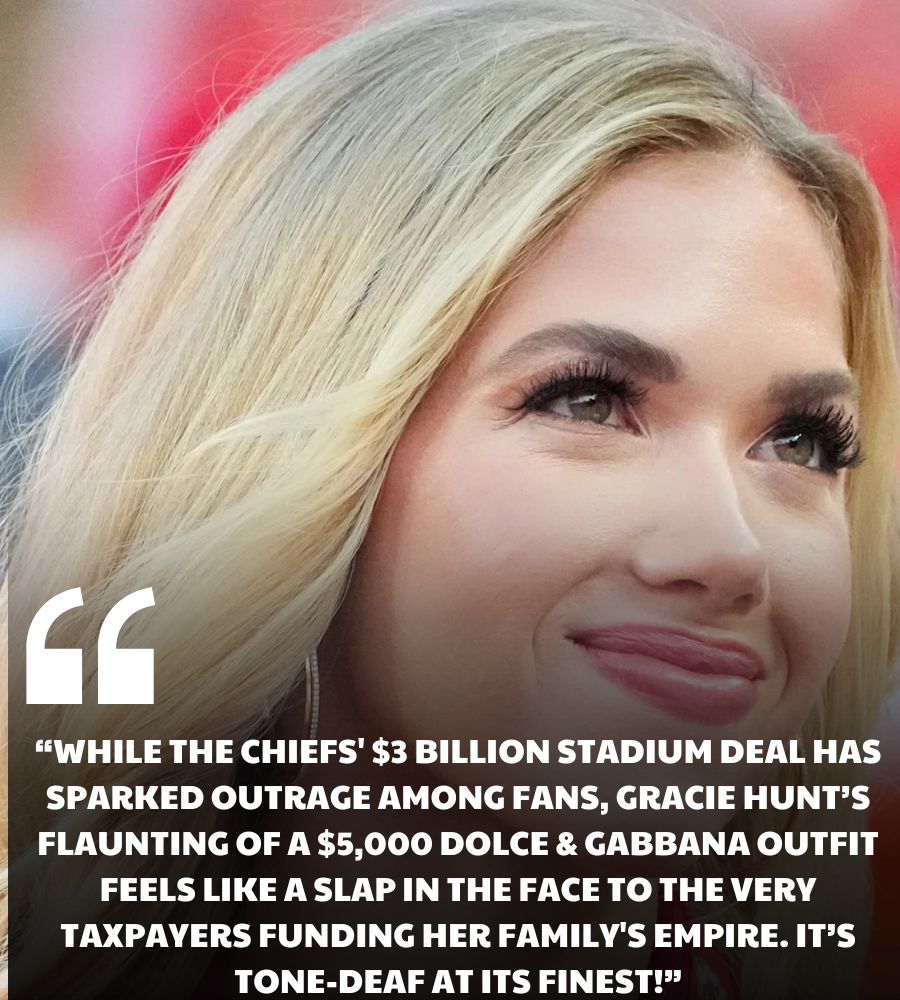
Gracie Hunt, daughter of Kansas City Chiefs owner Clark Hunt, has found herself at the center of a growing controversy after posting a picture of herself wearing a
$5,000 Dolce & Gabbana outfit during the same week the Chiefs’ $3 billion stadium deal was making headlines for all the wrong reasons. The backlash against her flaunting of luxury fashion amid public outcry over the funding of the stadium renovation has been swift and vocal, with many fans feeling that Hunt’s actions are out of touch with the financial struggles of taxpayers who are funding the new venue.
The Outrage Over the Stadium Deal
The Chiefs’ decision to move forward with a $3 billion new stadium deal in Kansas has already stirred up considerable unrest among fans. While some view the new stadium as an opportunity for economic growth and development in the region, others have expressed frustration over the fact that
$1.8 billion of the cost will be paid for by Kansas taxpayers. This deal came after a failed attempt to secure funding through a stadium tax in Missouri, which left many Chiefs fans feeling disconnected from the team’s future.
Gracie Hunt’s Fashion Choice: A ‘Slap in the Face’
Amid the controversy surrounding the stadium deal, Gracie Hunt posted a picture showcasing her Dolce & Gabbana ensemble, valued at
$5,000. The timing of the post, right after the stadium news broke, led many to feel that she was out of touch with the concerns of Chiefs fans and the
Kansas City taxpayers footing part of the bill for the stadium’s construction.
One fan responded harshly, saying, “While the Chiefs’ $3 billion stadium deal has sparked outrage among fans, Gracie Hunt’s flaunting of a $5,000 Dolce & Gabbana outfit feels like a slap in the face to the very taxpayers funding her family’s empire. It’s tone-deaf at its finest!”
This comment reflects the general sentiment of many online who felt that her display of wealth was insensitive at best and offensive at worst. Fans were quick to point out that
Gracie Hunt’s status and luxury lifestyle — showcased through high-end fashion posts — felt disconnected from the realities of the Chiefs’ fanbase, who are now having to deal with the financial consequences of the stadium deal.
Public Reaction and the Bigger Issue
While some have defended Gracie Hunt’s right to wear whatever she pleases, others have called out her lack of awareness, arguing that luxury fashion and exorbitant spending
should not be flaunted in the midst of a financially charged environment. For many, it’s not just about the outfit — it’s about the perceived arrogance of showing off designer clothing while the city deals with the aftermath of a controversial financial decision.
The stadium deal and the fallout from it have dominated headlines, and Hunt’s fashion post only added fuel to the fire. The situation has turned into more than just a discussion about the stadium; it’s become an ongoing conversation about how the
Hunt family and their public image are perceived in light of the team’s recent decisions.
Looking Forward: The Future of the Chiefs and Their Image
In the wake of this controversy, the
Kansas City Chiefs and Gracie Hunt find themselves at a crossroads. While the stadium deal may provide long-term benefits for the region, the negative reactions toward the team’s financial priorities cannot be ignored. Gracie Hunt’s
fashion choices and her public persona are now part of the larger narrative, and the Chiefs’ management may need to take a closer look at how they engage with their fanbase moving forward, especially as
fans demand more transparency in how the team’s financial decisions are made.
As Gracie Hunt’s luxury outfit continues to make waves, the larger conversation about NFL teams, ownership, and community support
remains front and center. The Chiefs will need to balance their image and the expectations of their fanbase as they push forward with their stadium plans.
Tampa Bay Lightning’s Blue Line Crisis: A Season on the Edge
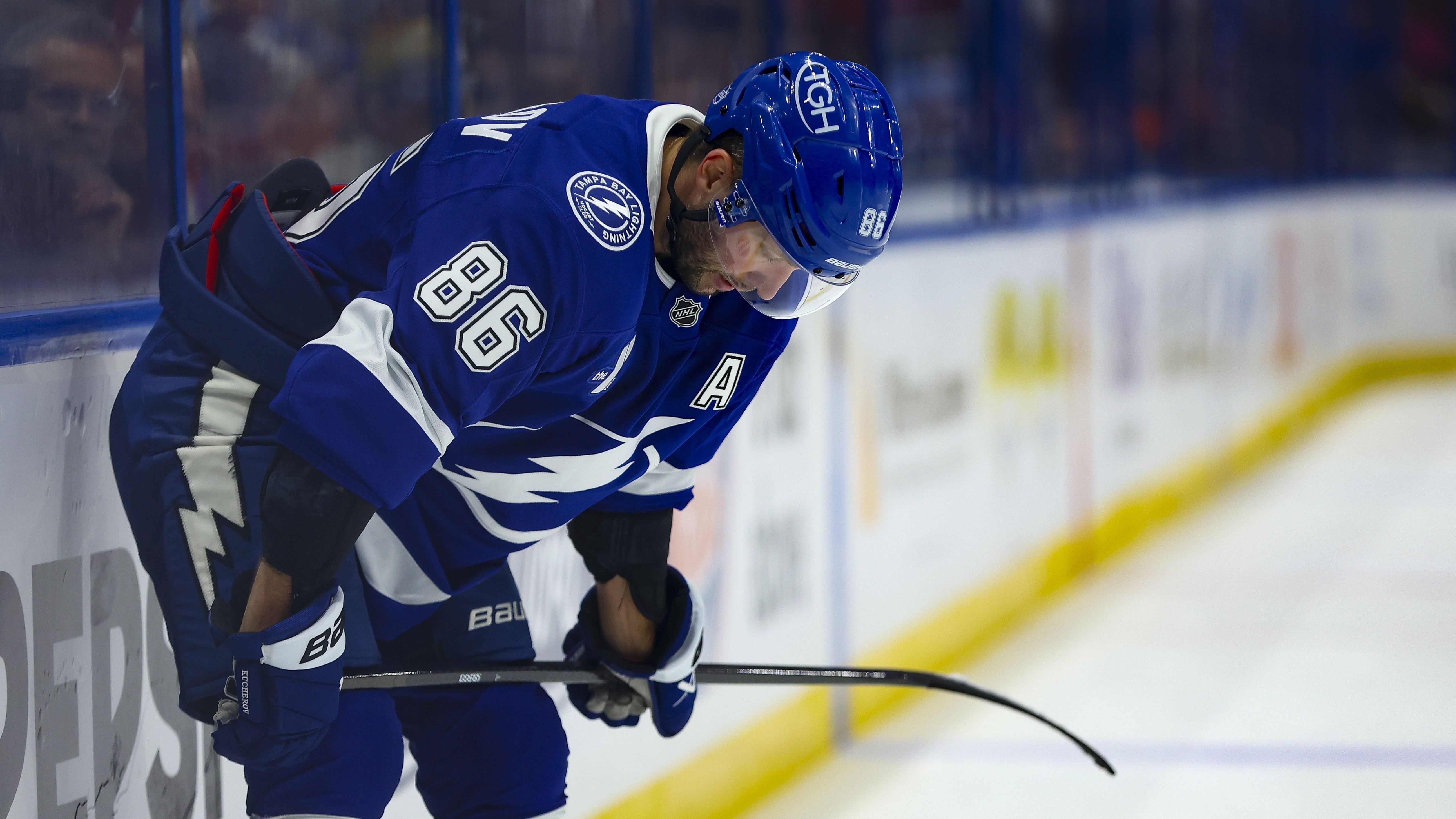
The Tampa Bay Lightning, a franchise synonymous with Stanley Cup glory in the past decade, now find themselves grappling with a problem that could define their 2025–26 campaign: defensive depth and blue line reliability.
While the team’s offense remains potent, led by Nikita Kucherov and Brandon Hagel, cracks on the back end are raising alarms across the NHL.
During the 2025 offseason, Tampa Bay made modest moves to bolster their forward group, adding Pontus Holmberg and Jakob Pelletier while re-signing Yanni Gourde and Gage Goncalves.
These transactions kept scoring depth intact, but the front office failed to secure significant reinforcements for the defense. Analysts immediately flagged this as a potential misstep, warning that the Lightning’s blue line could become a liability once the season intensified.
As of late December, the Lightning hold a 19–13–3 record, placing them in the thick of the Atlantic Division race. Their offensive firepower is undeniable: Kucherov leads the team with 43 points, Hagel has already netted 18 goals, and goaltender Andrei Vasilevskiy continues to provide elite performances with a 2.30 goals-against average.
Yet, the team’s defensive balance tells a different story. With 94 goals conceded, Tampa Bay’s inability to consistently shut down opponents has become a glaring weakness.
Defense wins championships, and Tampa Bay knows this better than anyone. Their Cup runs were built not only on offensive brilliance but also on a disciplined, structured defensive corps.
Today, however, the Lightning rely heavily on veterans like Victor Hedman and Ryan McDonagh, whose leadership is unquestioned but whose mileage is beginning to show. Younger defensemen such as J.J. Moser have stepped up, posting a +22 rating, but the overall unit lacks the depth to withstand injuries or playoff-level intensity.
The biggest risk for Tampa Bay is burnout and exposure in the postseason. If the blue line continues to falter, Vasilevskiy will be forced to shoulder an unsustainable workload.
Moreover, the lack of defensive reinforcements could leave the Lightning vulnerable against physical teams like the Boston Bruins or Florida Panthers, who thrive on exploiting defensive lapses.
What Needs to Change
For Tampa Bay to remain a legitimate contender, general manager Julien BriseBois must address the defensive gap before the trade deadline. Acquiring a reliable top-four defenseman would stabilize the blue line and ease the burden on Hedman and McDonagh. Without such a move, the Lightning risk becoming a team that dazzles offensively but crumbles when the stakes are highest.