
A study has claimed to have found a link between solar activity and a rise in heart attacks.
Carried out at the National Institute for Space Research (INPE), the study looked at health records from São José dos Campos, in São Paulo state, Brazil, between 1998 and 2005.
These seven years were considered to have been a particularly active time for solar activity. The study, which was published in the journal Communications Medicine, examined the prevalence of hospital admissions for myocardial infarction, where the supply of blood to the heart is suddenly stopped.
During this period, the data included 871 men and 469 women who were admitted with the condition, as well as an examination of variations in Earth’s geomagnetic field.

The study claimed to link solar activity with heart attacks (SimpleImages/Getty)
Luiz Felipe Campos de Rezende is a researcher at the INPE and the corresponding author of the article.
Speaking to Agência FAPESP, de Rezende said: “We classified the days analyzed as calm, moderate, or disturbed. And the health data were divided by sex and age group [up to 30 years old; between 31 and 60; over 60 years old].
“It’s worth noting that the number of heart attacks among men is almost twice as high—regardless of geomagnetic conditions.”
However, it was women who the study said appeared particularly affected, despite nearly double the number of admissions being from men.
“But when we look at the relative frequency rate of cases, we find that for women, it’s significantly higher during disturbed geomagnetic conditions compared to calm conditions,” de Rezende continued.
“In the 31–60 age group, it’s up to three times higher. Therefore, our results suggest that women are more susceptible to geomagnetic conditions.”
The effect of variations in the magnetosphere on satellites and communications is widely documented; however, studies since the 1970s have also examined the potential impact these variations might have on the human body.
However, de Rezende explained that it’s still early days and more work needs to be done to back up the connection between heart attacks and solar activity.
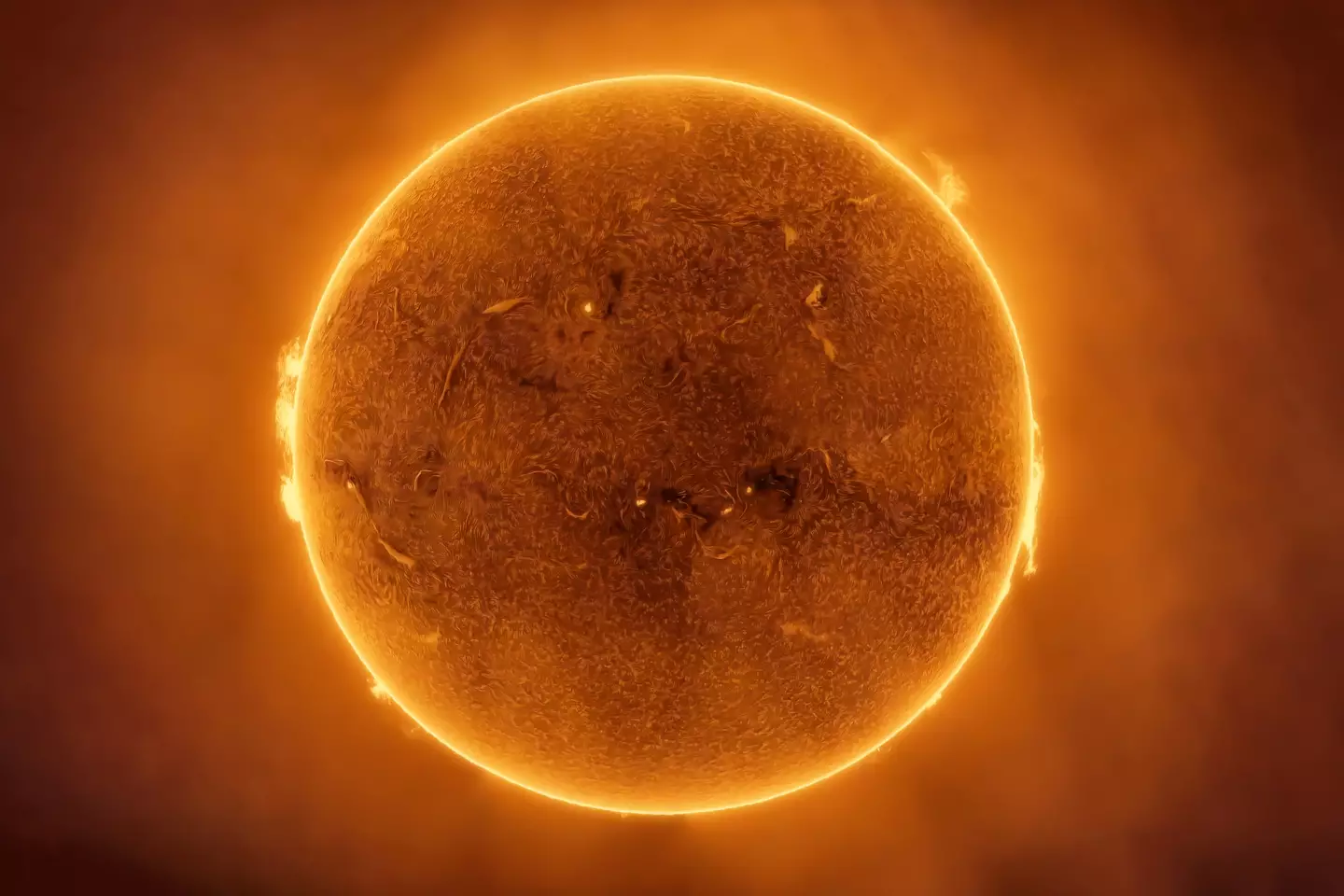
It’s still early days in the study (Javier Zayas Photography/Getty)
“The intention isn’t to cause alarm among the population, particularly among women,” he said. “There are some limitations to consider: this is an observational study conducted in a single city, using a sample size that isn’t yet ideal for medical questions.”
He added: “However, we believe that these findings represent an empirical result of hypothetical significance and relevance that shouldn’t be disregarded in the scientific context.”
The study further says that it doesn’t disregard other medical issues that could impact a person, like ‘genetic issues, sedentary lifestyles, and habits’.
It comes as NASA has warned that the Sun is moving into an unexpected period of increased activity.
Jamie Jasinski, of NASA’s Jet Propulsion Laboratory in Southern California, stated that researchers anticipated the Sun would enter a period of low activity in 2008.
“But then the trend of declining solar wind ended, and since then plasma and magnetic field parameters have steadily been increasing,” he said, adding: “All signs were pointing to the Sun going into a prolonged phase of low activity.
“So it was a surprise to see that trend reversed. The Sun is slowly waking up.”
Featured Image Credit: Getty Images/Catherine Falls Commercial
Topics: News, Science, Health, World News